
Our block of flats backs on to the South facing slopes of the Monte Gibralfaro, a sheer cliff face who’s most noticeable inhabitants are the Yellow-legged Gulls which roost and nest here in good numbers. At this time of year they become a bit aggressive and they swoop low over the heads of the sightseers squawking loudly. This species is increasing in numbers locally and, like its near Northern relative, the Herring Gull, is evolving into an urban scavenger/predator. They can be seen chasing feral pigeons and I have often observed them struggling in their attempts to consume their prey. It got me wondering whether, in time, they will develop a hooked bill and/or longer toes to help the process. When you see a Peregrine dispatch a pigeon in a couple of minutes, and the gulls taking up to half an hour or so, the advantages are evident.
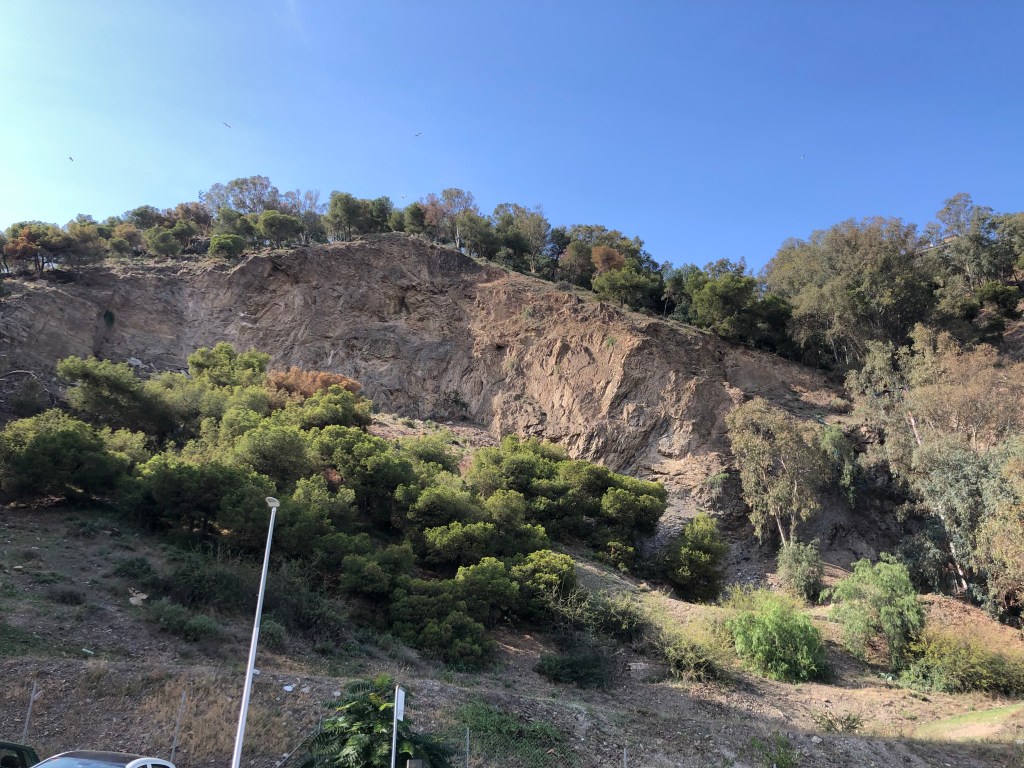
Swifts, both Common and Pallid nest in the buildings and they are candidates for the first species I see from the back door at this time of year. I spotted a pair of Kestrels perched on a ledge waiting for the moment the Swifts land on the side of the building, to strike before they disappear through the cracks. Black Starlings roost in the big Eucalyptus, and Sardinian Warblers dart through the undergrowth chattering. Occasionally the males fly upwards singing, to attract a mate. This is the most abundant warbler species on the hill by far. You can see them practically anywhere and they are one of the year round residents.
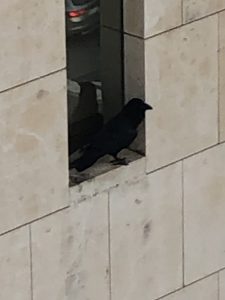
A family of Ravens also call the cliff home. I have seen up to four adults together (I assume it’s a regular pair with last year’s offspring) but mostly I see one or two birds. As far as I know, this is the only breeding pair in the City, although it is a widespread species in the province. Yesterday one flew down and perched on a window ledge, checked itself out in the glass and started softly croaking to itself.
Collared Doves are one of the most numerous species of birds on the hill, well, throughout the City to be honest. The numbers are striking, and some of the parks and gardens are seeing massive numbers of fatalities as viruses run amok. The population is in stark contrast to the Turtle Dove, which used to fill that particular ecological niche before the arrival of the Collards. One solitary Turtle Dove has been calling form the top of a Cyprus fir for the last couple of weeks, but I think it has moved on. Wood Pigeons are also thriving, and are another common nesting resident.
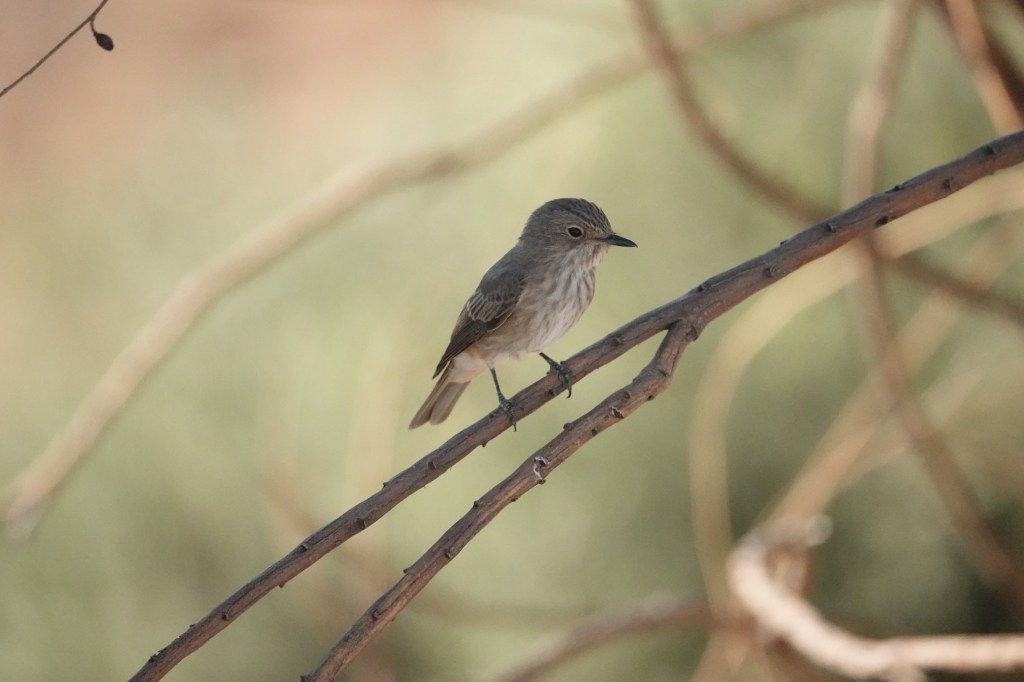
One of the late Spring migrants to use the hill for nesting is the Spotted Flycatcher. I’d say there are between 8-12 nesting pairs and they will be with us well after the swifts have gone South. I watched a flycatcher mob a squirrel in a eucalyptus. The squirrels are increasing in number and have to be the biggest threat to the tree-nesting birds as they are known to rob eggs. Pied flycatchers can be seen in the woods but only during migration.
Today’s dog walk finished with a flourish, a Golden Oriole calling, hidden in the lush pine tops. We’ve had rain! Late, but welcome nonetheless. More is forecast for midweek so, fingers crossed.
 Back Door Birding